How to Keep Your Dog Warm and Safe This Winter
Snow, sleet, ice, and wind: There’s a lot to prepare for when it comes to winter weather. Just like we’re affected by the cold, our dogs are, too. Here are a few simple measures you can take to make sure your dog stays warm, happy, and healthy throughout the winter.
Limit Your Dog’s Time Outside
Dogs can suffer from frostbite, especially on delicate earflaps and tail tips. In extreme cold, it’s a good idea to keep dogs inside, with the exception of the heavy-coated northern breeds that thrive in low temperatures. If it’s not possible to keep the dogs indoors, be aware of the signs of frostbite, such as skin that appears white or blue.
Stay Indoors When Possible
Even a big, fuzzy dog that lives indoors will need some time to acclimate to freezing temperatures. Short romps outside will help your dog’s body get used to the change in the weather. Keep indoor activities fun with new indoor games. There are also interactive dog toys you can use to give your dog a fun way to get both mental and physical exercise.
Bundle Your Dog Up
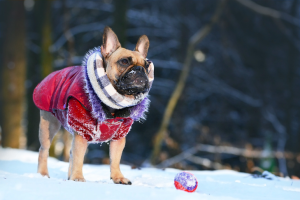
Sure, most dogs have their own coat. But, you wouldn’t want to go out in a blizzard in a light spring jacket. Make sure that small, delicate, and short-haired dogs (even large ones like Greyhounds), have an appropriate winter wardrobe, including a sturdy winter coat and a fitted sweater.
Consider Your Dog’s Age
Where climate is concerned, age is more than a number. Like humans, very young and very old dogs have a hard time regulating body temperature. As a result, they have more extreme reactions to changes in weather. Romps in the snow may be too much for their more delicate constitutions. Keep the older dogs and the puppies indoors as much as possible.
Protect Your Dog’s Paws
Look at the Iditarod sled-dog teams, and you’ll notice that their paws are covered by booties. Mushers know that the race may be lost because of injuries and abrasions from running on ice. Even if your dog isn’t dashing through 1,000 miles of frozen Alaskan wilderness, winter conditions can still do damage. Different retailers offer dog boots or paw protectors that work well to keep your dog’s feet safe.
Invest in a Heated Dog Bed
Yes, heated dog beds are safe! A heated dog bed can be a great option for dogs that tend to get chilly, including senior dogs. Look for ones with an auto-shutoff that are made specifically for dogs. There are many options for heated dog beds and heating pads for dogs.
Trim Foot Fuzz
Hair on the feet of long-haired dogs can form ice balls between pads and toes. Keep them well-trimmed, cutting the hair so that it is even with the surface of the foot.
Clean Your Dog’s Feet
City streets are coated with deicing substances, such as sodium chloride (rock salt) and calcium chloride. These substances make sidewalks safe for pedestrians, but can damage paw pads. Make sure you clean off your dog’s feet. Some people keep a bucket next to their front door to rinse their dog’s feet when they come inside. Use warm water and make sure to reach spots between the toes and pads. Some dogs will also need a paw balm (which you can buy or make at home) or a moisturizer for dry skin.
Have a Plan if You Lose Power
Winter weather can be unpredictable. With freezing temperatures and snowstorms, sometimes power lines freeze and go out. If you lose power this winter, have a plan in place to keep your dog warm.
Avoid Thin Ice
Too often we hear stories of dogs that had to be rescued from icy waters (and those are the lucky ones). It might look like fun to slide across that frozen pond. However, ice can easily crack, and you and your dog could fall in. Slipping on ice can also lead to muscle strains and other injuries.
Beware of Antifreeze
As little as a teaspoon of antifreeze can cause kidney failure. Be alert to the signs that your dog has swallowed some of it. Symptoms include drooling, vomiting, seizures, excessive thirst, panting, lethargy, and a drunken appearance.
If you think your dog has ingested antifreeze, it’s important to get to a vet as soon as possible. Even if you keep your antifreeze safely tucked away, there is still a danger from residue in the streets. Most antifreeze is green ethylene glycol, but it comes in several different colors. So watch where your dog is sniffing.
In case your dog does run into any unfavorable winter side effects, always be sure to consult your veterinarian.